
Every expensive bathroom mistake we are called to fix was decided before the tile went on. The fixtures were fine. The rough-in was not.
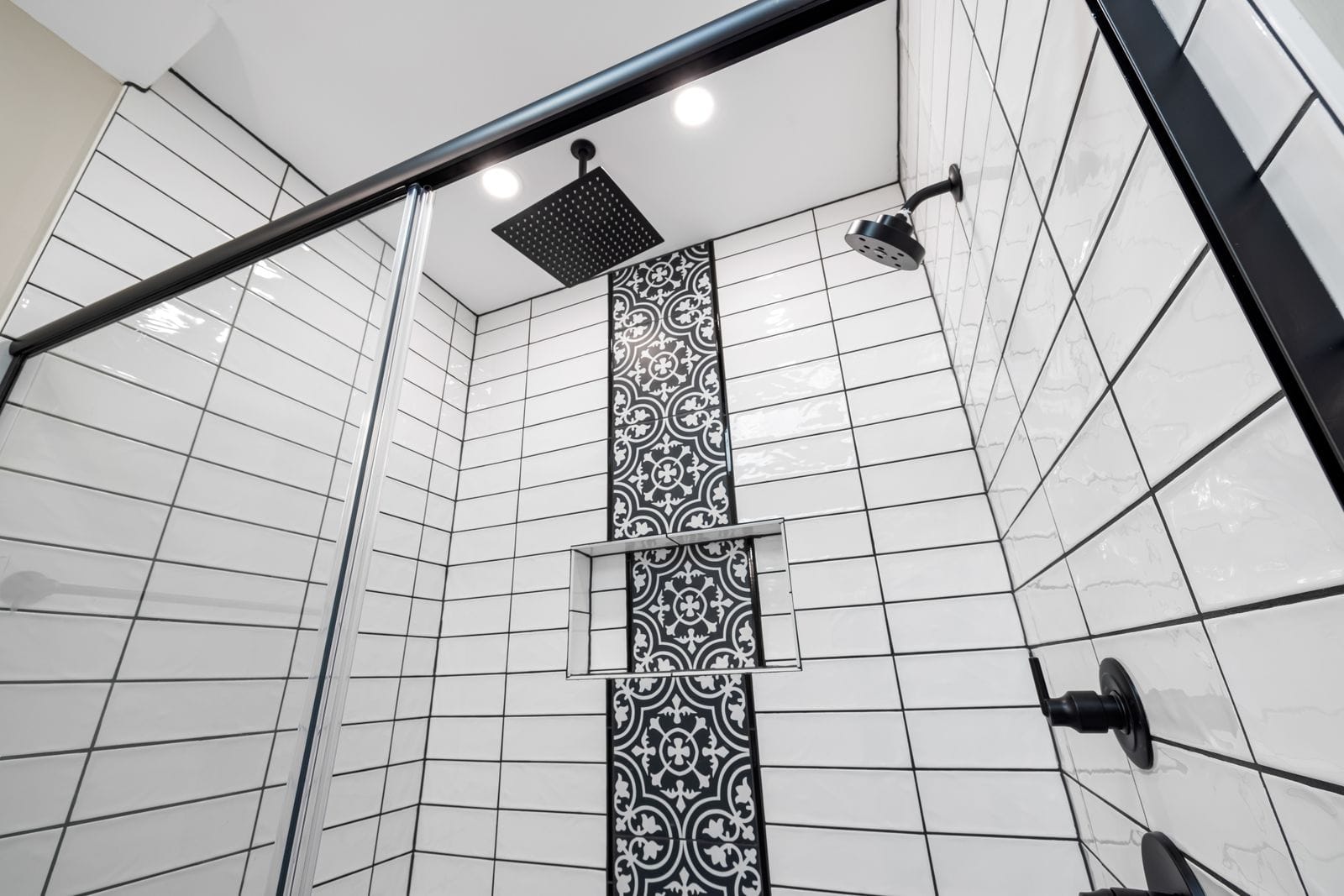
A high-end bathroom is a plumbing job first and a finishing job second. Once the walls are closed and the tile is set, a valve that sits a quarter inch too deep, a carrier bolted at the wrong height, or a drain two inches off centre becomes a demolition problem. Here is the list we work through on every luxury bathroom before anyone picks up a trowel.
1. Valve depth against the finished wall
Thermostatic and pressure-balance valves have a narrow range of acceptable depth, printed on the plaster guard. That depth is measured from the finished wall, not the stud face. Before we set a valve we need the tile thickness, the backer board thickness, any membrane, and any waterproofing build-up in writing. If the designer changes from a 6 mm porcelain to a 12 mm slab after rough-in, the trim will not fit. We ask the question at rough-in so nobody asks it at trim-out.
2. Carrier height and backing for wall-hung fixtures
Wall-hung toilets and basins sit on steel carriers inside the wall. The carrier sets the finished rim height, and the finished height depends on floor build-up: tile, heating mat, self-leveller. We mount carriers only after the floor build-up is confirmed, and we add solid blocking for every grab bar, shower seat and towel warmer the drawings show, plus the ones the owner will ask for later. See our smart toilet and bidet installation page for what the carrier has to carry.
3. Drain position for linear and curbless showers
A linear drain wants a single-plane slope to one edge; a centre drain wants four. A curbless entry needs the floor recessed or the joists sistered so the slope exists at all. The drain body is set before the shower pan is formed, and it cannot move after. We confirm the drain model, the tile thickness at the drain, and the slope direction with the tile setter before we cut.
4. Can the house actually supply the shower?
A rain head, a hand shower and four body sprays running together can ask for more than 15 gallons a minute. A typical Lower Mainland house has a 3/4-inch service and a 1/2-inch branch to the bathroom. The showroom will not tell you that the three-outlet system will run at a trickle. We check static and running pressure, the service size, and the water heater’s recovery rate, and we size the branch and the valve to match. Details on our custom shower systems page.
5. Hot water that keeps up
A soaker tub holds 80 to 110 gallons. A 50-gallon tank will not fill it hot. A condensing boiler with an indirect tank, a larger tank, or a correctly sized tankless unit is a rough-in decision because the gas line, venting and recirculation loop all live in the walls.
6. Service access
Thermostatic cartridges, check valves and steam generators need service. We leave an access panel or a removable fixture at every point where a part will one day be replaced. A luxury bathroom with no access is a luxury bathroom with a future hole in it.
7. Steam generators and electric floor heat
A steam shower needs a generator location, a drain for the generator, a dedicated circuit and a sloped ceiling. None of that can be added after tile. Electric floor heating needs its sensor and lead planned around our drains and supplies, so we coordinate with the electrician before either of us closes anything.
8. Pressure test and photographs
Everything is tested under pressure before the inspector and before the drywall. We photograph every wall with a tape measure in frame, so when the owner wants a shelf drilled in three years, the plumber knows exactly what is behind it.
What this means for your project
If you are planning a bathroom where the fixture package is the point, bring us in while the drawings are still changing. We work with designers and builders across Langley and the Lower Mainland, and the high-end plumbing page explains what that looks like. For the kitchen side of the same conversation, see luxury kitchen plumbing.
Related guides
- Can Your House Run a Custom Shower? Flow, Pressure and the 3/4-Inch Question
- Our Philosophy: Do It Right, Do It Once
- Resource: Understanding BC Plumbing Code
- Pro-Press Tech: No Flames, Just Permanent Seals